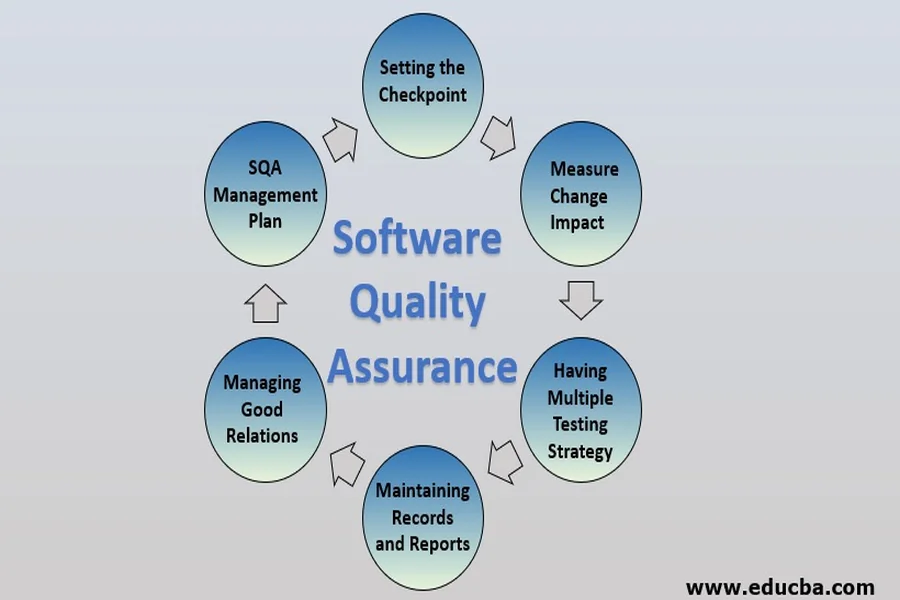
Quality is not a stage—it’s a discipline embedded across the entire Software Development Lifecycle (SDLC). Quality Assurance and testing services ensure that every step, from ideation to deployment, is guided by structured practices that prevent risks, reduce costs, and deliver reliable software.
Requirements & Planning
At the outset, QA plays a vital role in clarifying requirements. Through ambiguity checks, traceability mapping, and structured checklists, QA ensures requirements are testable and complete. Risk assessment workshops at this stage lay the foundation for a risk-based testing strategy, avoiding costly rework before development begins.
Design
QA safeguards design integrity by validating architecture, security, and performance-related non-functional requirements (NFRs). It enforces review standards and acceptance criteria, ensuring that design outputs are measurable and test-ready with clear quality gates.
Development
Rather than waiting for code completion, QA integrates early into development with shift-left practices. This includes static code analysis, secure coding guidelines, enforcing unit test coverage, and standardized pull request (PR) review templates. The focus is on defect prevention, not just detection.
Testing & Validation
During this phase, QA ensures comprehensive test orchestration—covering unit, integration, regression, system, and user acceptance testing. It manages test data, automation strategies, and environment readiness, while enforcing entry and exit criteria to ensure releases are based on quality evidence, not arbitrary deadlines.
Release & Operations
QA extends its value into operations with shift-right practices. This includes defining smoke test protocols, rollback mechanisms, observability expectations, and monitoring strategies. Post-release, QA drives defect leakage analysis and root cause assessments, feeding insights back into continuous improvement cycles.
Governance & Metrics
To create transparency, QA establishes a single source of truth through quality dashboards. Key metrics such as defect density, defect removal efficiency (DRE), test coverage, and cycle times provide actionable insights to refine processes and optimize delivery outcomes.
Collaboration Models
- Developers: Adhere to coding standards, unit test practices, and peer review protocols.
- Product Owners: Provide clear acceptance criteria and support user acceptance testing (UAT).
- DevOps Teams: Integrate QA into CI/CD pipelines with automated test gates and NFR compliance checks.
Result
Reduced unexpected issues, quicker delivery, and enhanced customer confidence. For organizations evaluating quality assurance and testing services among top software testing companies, a well-established, end-to-end QA function across the SDLC stands out as the key differentiator.