
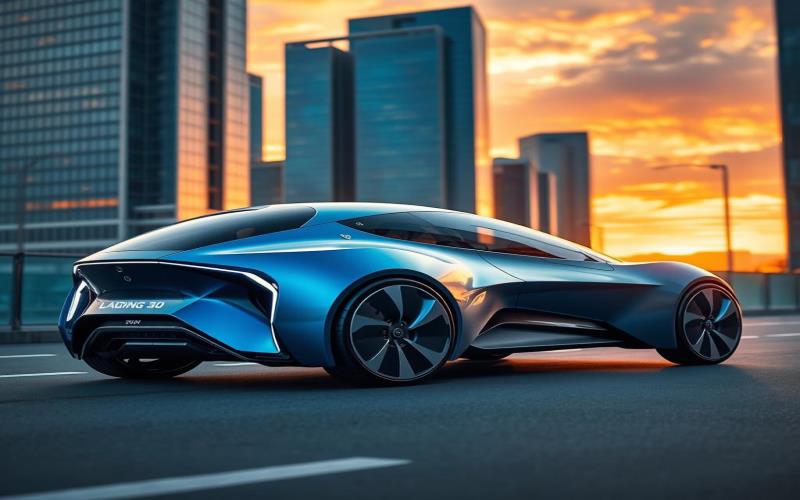
Concept cars have long been a showcase for Togel Hari Ini automotive innovation, pushing the boundaries of design, technology, and performance. These futuristic vehicles often seem like they belong in science fiction, but occasionally, they transition from bold prototypes to tangible realities. Here, we explore some of the most groundbreaking concept cars that made their way to production, forever changing the automotive landscape.
1. Tesla Model S
When Tesla unveiled the Model S prototype in 2009, it was a bold vision for the future of electric vehicles (EVs). At the time, EVs were often seen as impractical and limited. The concept promised a sleek, high-performance sedan with an impressive range, and Tesla delivered. The production Model S, launched in 2012, redefined the industry with its elegant design, long-range battery, and cutting-edge features like over-the-air updates and Autopilot. Today, it remains a benchmark for electric luxury sedans.
2. BMW i8
The BMW Vision EfficientDynamics concept, revealed in 2009, was a futuristic plug-in hybrid sports car with daring aesthetics and advanced technology. This concept evolved into the BMW i8, launched in 2014. The production model stayed true to its roots, featuring butterfly doors, a carbon-fiber-reinforced body, and a hybrid powertrain combining performance and sustainability. The i8 became an icon of futuristic design and engineering.
3. Chevrolet Volt
The Chevrolet Volt began as the Chevrolet Volt Concept, unveiled at the 2007 Detroit Auto Show. Its promise was revolutionary: an extended-range electric vehicle capable of running on both electricity and gas. By 2010, Chevrolet delivered on that promise with a production model that offered drivers an electric range of 35 miles, backed by a gasoline generator for longer trips. The Volt paved the way for modern plug-in hybrids.
4. Nissan GT-R (R35)
The Nissan GT-R Proto concept, introduced in 2005, teased enthusiasts with a preview of what was to become the R35 GT-R. Known as “Godzilla” for its dominance on the track, the production version debuted in 2007, featuring a twin-turbocharged V6 engine, an advanced all-wheel-drive system, and groundbreaking performance metrics. The GT-R became a global icon, delivering supercar performance at a relatively accessible price.
5. Porsche Taycan
Originally introduced as the Mission E concept in 2015, Porsche’s vision of an all-electric sports sedan captivated the automotive world. The Taycan, launched in 2019, stayed true to the Mission E’s sleek design and advanced electric architecture. With lightning-fast charging, dual-motor all-wheel drive, and Porsche’s signature performance dynamics, the Taycan proved that electric cars could deliver thrilling driving experiences.
6. Acura NSX (Second Generation)
The Acura NSX Concept made waves at the 2012 Detroit Auto Show, promising a hybrid supercar with precision engineering and stunning design. The production NSX, launched in 2016, fulfilled that promise. With a twin-turbo V6 engine paired with three electric motors, it offered a sophisticated all-wheel-drive system and cutting-edge performance. The NSX blended innovation with heritage, becoming a modern marvel.
7. Jaguar I-PACE
Jaguar’s I-PACE Concept, unveiled in 2016, marked the brand’s first foray into electric vehicles. By 2018, the I-PACE entered production as a luxury electric SUV with a futuristic design and impressive performance. Its dual electric motors delivered over 400 horsepower, while its spacious interior and advanced technology made it a strong competitor in the growing EV market. The I-PACE has since garnered numerous awards, solidifying its place as a trailblazer.
8. Ford GT (Second Generation)
The Ford GT40 concept debuted in 2002, paying homage to the legendary Le Mans-winning GT40 of the 1960s. This prototype evolved into the second-generation Ford GT, launched in 2005, which captured the essence of its predecessor while incorporating modern engineering. Its twin-turbo V6 engine, aerodynamic design, and carbon-fiber construction demonstrated Ford’s commitment to innovation. The GT remains a symbol of Ford’s racing heritage and technological prowess.
9. Toyota Prius
The Toyota Prius, while not a concept car in the traditional sense, began as a radical idea in the 1990s. Its prototype promised a hybrid vehicle capable of reducing emissions and fuel consumption. The production model, launched in 1997, revolutionized the automotive industry, becoming the world’s first mass-produced hybrid car. Over the years, the Prius has evolved, incorporating advanced features while maintaining its status as an eco-friendly icon.
10. Audi e-tron GT
Audi’s e-tron GT Concept, introduced in 2018, was a vision of electric luxury and performance. By 2021, the e-tron GT became a reality, combining Audi’s renowned Quattro all-wheel drive with a powerful electric drivetrain. Its sleek design, high-quality interior, and impressive driving dynamics earned it widespread acclaim. The e-tron GT exemplifies Audi’s dedication to electrification and sustainability.
The Journey from Concept to Reality
The transition from concept to production is a complex and challenging process. While concept cars often push the boundaries of design and technology, translating those ideas into market-ready vehicles requires balancing innovation with practicality, safety, and cost-effectiveness. Automakers must also consider consumer demand, regulatory requirements, and manufacturing constraints.
What sets successful concept-to-reality cars apart is their ability to retain the core vision and excitement of the prototype while meeting real-world expectations. These vehicles not only capture imaginations but also influence industry trends and inspire future innovations.
Conclusion
The journey of concept cars becoming reality showcases the automotive industry’s relentless pursuit of progress. Vehicles like the Tesla Model S, BMW i8, and Porsche Taycan prove that the future imagined by concept cars can become the present. These groundbreaking models demonstrate that innovation isn’t confined to auto shows but can transform how we drive, live, and think about transportation. As we look ahead, the line between concept and reality continues to blur, promising a future of endless possibilities on the road.